Market Research for Mobile App Creation
As a personal project, I focused on early-stage research and strategy for a mobile app concept – a competitor to Goodreads. I conducted a market analysis to identify key trends and competitors, developed a customer persona to clarify the target audience, and carried out contextual interviews to gather real user insights. Based on these findings, I created a usability testing script to guide future prototyping and validation. This work lays the foundation for a user-centered product that’s grounded in real-world needs and behaviors.
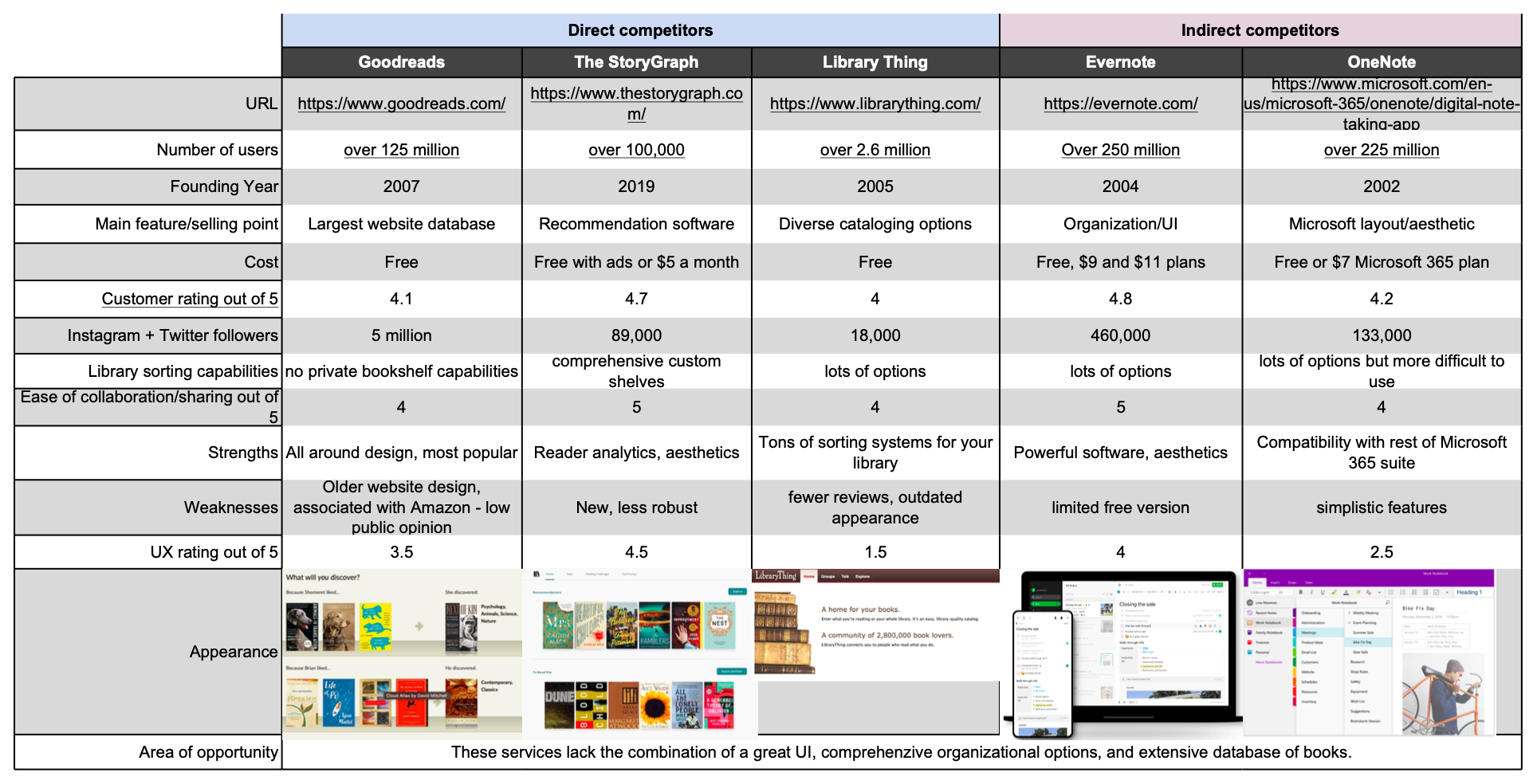
Market Analysis
The goal of this analysis was to gain a deeper understanding of Goodreads’s competition and target audience. It helped me identify market trends, customer needs, and potential growth opportunities, providing insights that guide strategic decisions and product development. Key objectives include spotting gaps in the market, evaluating competitors’ strengths and weaknesses, and understanding customer behavior.
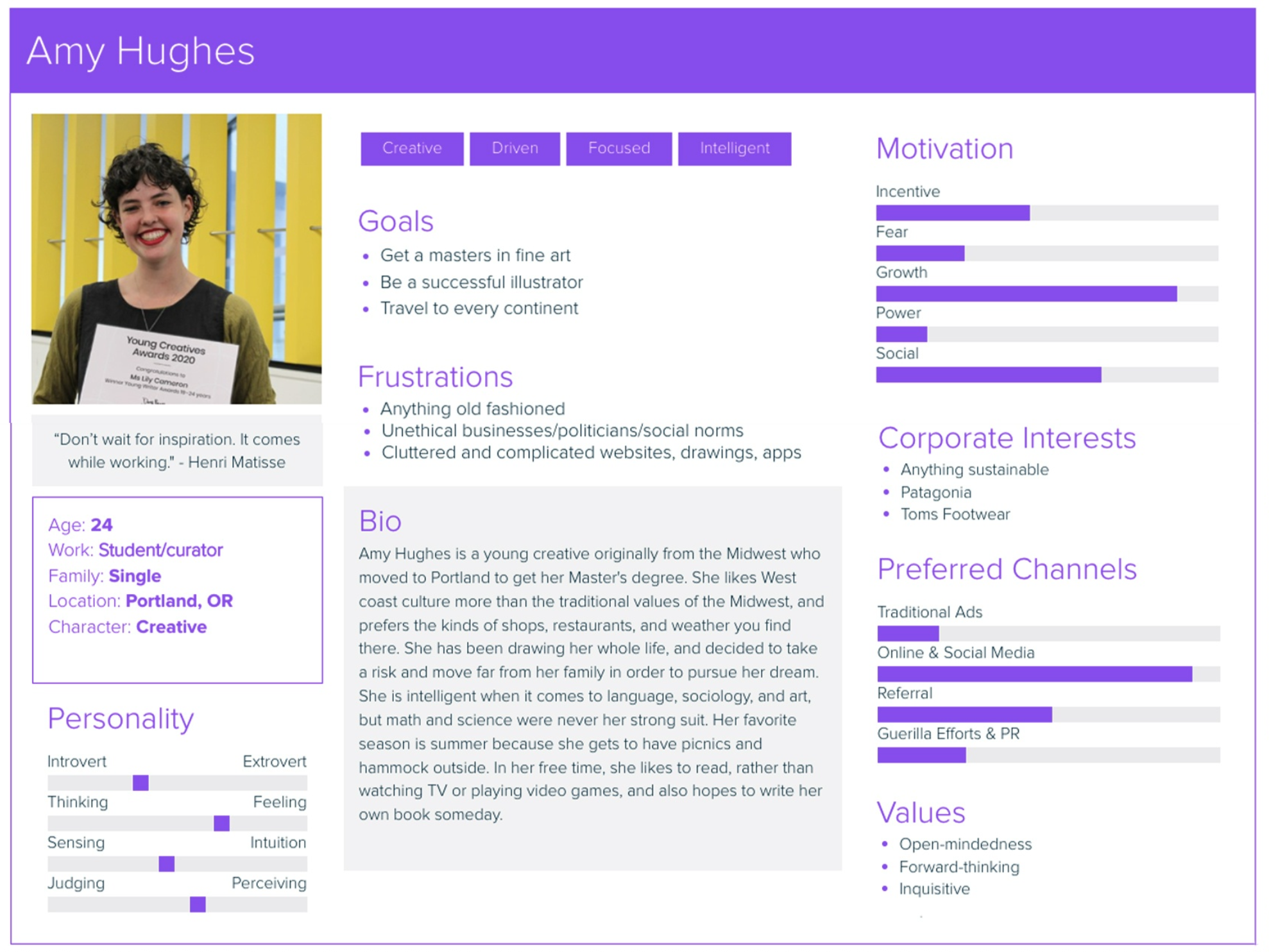
Customer Persona
The goal of a customer persona is to create a detailed, fictional profile that represents a business’s ideal customer – to help teams understand and address their needs, motivations, and challenges. Personas guide product development, improve targeted marketing, enhance customer experience, and align team strategies, ensuring that resources are focused on high-impact strategies. Ultimately, this persona enabled me to hypothesize more relevant solutions and messaging, which lead to stronger customer loyalty and better outcomes overall.
Contextual Interviews
To better understand reader behavior and expectations, I conducted four contextual interviews—two with friends and two with strangers who responded to a social post. This mix of participants provided a balance of familiarity and fresh perspective. Each session was transcribed and analyzed into four categories: pros, cons, hopes/expectations, and concerns.
Key Insights:
- Pros: Users primarily value Goodreads for tracking what they’ve read. Other appreciated features include sharing lists, getting recommendations, and occasional author interactions. Long-term users expressed strong loyalty due to convenience, while newer users were more open to alternatives.
- Cons: Major frustrations centered on Amazon ownership and poor book discovery tools. While the design wasn’t a dealbreaker, participants wanted more frequent updates and better performance.
- Hopes & Expectations: Users wanted a modern redesign, advanced search filters, and more regular updates to keep the platform fresh. Independence from Amazon was also a recurring theme.
- Concerns: Participants worried about commercialization and the loss of genuine author interaction, along with concerns about privacy and data security.
The findings emphasized the need for an independent, community-driven platform with advanced search functionality and a modern interface. To succeed, a new platform would need to retain Goodreads’ large database and personalized recommendations while improving usability and trust.
Usability Testing Script
Following the interviews, I created a usability testing script to validate early prototypes built in Figma. The script was designed to simulate real user flows, uncover usability barriers, and capture honest reactions.
Session Structure:
- Introduction & Consent: Participants were assured that the app was being tested, not them, and encouraged to think aloud while performing tasks. With permission, sessions were recorded to capture interactions and feedback.
- Pre-Session Questions: I asked about reading habits, mobile usage, and methods for tracking books to establish context.
- Homepage Tour: Participants were asked to freely explore the app’s home page and narrate their impressions, helping identify first impressions and intuitive design cues.
Task Scenarios:
- Find a recommended book on the homepage and start reading it.
- Locate posts about that book and add the authors as friends.
- Visit the social page of that book’s author.
- Update the profile picture.
- Navigate to the social page of a friend through the user’s friends list.
Probing & Wrap-Up:
I included opportunities for observers (or myself) to ask follow-up questions, ensuring clarity on pain points. Sessions ended with open Q&A and participant incentives.
Outcome:
This script created a repeatable framework for testing prototypes, ensuring that design decisions could be informed by real user behavior rather than assumptions. It also established a foundation for iterative improvements, from onboarding flows to social interaction features.
Bringing all of this research together—market analysis, customer personas, contextual interviews, and usability testing – I translated insights into a user-centered design built in Figma. The final prototype reflects real user needs, balancing community-driven features with streamlined navigation and a modern aesthetic. You can explore the finished prototype here: Prototype
 Dominic LaMarca